Sunday, July 4, 2010

July 1st, Ava Rae arrives

So pretty! This photo doesn't do her justice. Ava Rae arrived sweet and serene and has already left her tracks on her daddy's heart. Welcome Ava!


May all babies be born into loving hands... 

K. Michelle Doyle, CNM, NYS LM
www.localcaremidwifery.com
www.localcaremidwifery.blogspot.com

Friday, July 2, 2010

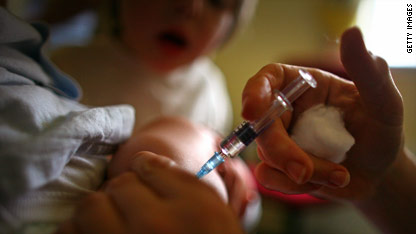
MMRV:Combo shot boosts kids' fever-related seizure risk

From CNN Health, information about the MMRV vaccine.

May all babies be born into loving hands...

K. Michelle Doyle, CNM, NYS LM
www.localcaremidwifery.comwww.
localcaremidwifery.blogspot.com

June 28th, 2010
09:38 AM ET

By Miriam Falco
CNN Medical News Managing Editor

Children who get a combination of measles, mumps, rubella and chickenpox vaccines in one shot are at a slightly increased risk of getting a fever-related seizure, compared with children getting two separate shots – one containing measles, mumps and rubella and the another containing the chickenpox (varicella) vaccine, according to a new study published in the journal Pediatrics.
"The risk of a febrile seizure after any measles-containing vaccine is low – about one febrile seizure in 1,000 doses" says lead study author, Dr. Nicola Klein, co-director of Kaiser Permanente's Vaccine Study Center. "But if a child gets the combination vaccine, the risk doubles," says Klein.
Researchers looked at vaccine-safety data from more than 459,000 toddlers between the ages of 12 and 23 months and found there was one additional case of febrile seizure for every 2,300 doses of MMRV (measles, mumps, rubella, varicella) vaccine given. The seizures occurred seven to 10 days after the injection.
According to the Centers for Disease Control and Prevention, a febrile seizure is a fever-related seizure, which can occur when a child has a fever at or above 102°F or when a high fever is going down.
"Febrile seizures are benign," Klein says, meaning they're generally not dangerous. "They are very frightening to parents, but do not lead to long-term seizures or epilepsy." The American Academy of Pediatrics agrees: "While febrile seizures may be very scary, they are harmless to the child. Febrile seizures do not cause brain damage, nervous system problems, paralysis, mental retardation, or death."
Febrile seizures can occur in children ages 6 months to 5 years, but are most common in toddlers ages 12 months to 18 months, according to the American Academy of Family Physicians. Klein says up to 5 percent of children will have a febrile seizure between 6 months and 5 years, but that they are more likely to be caused by a common cold or other infections.
This combination vaccine was first approved in 2005. "The benefit of the MMRV is ease of administration," says Dr. William Schaffner, chairman, Department of Preventive Medicine at Vanderbilt University and a liaison to the Advisory Committee on Immunization Practices, the CDC's vaccine advisory board.
It was that ease – a single shot for four vaccines, which led the ACIP to recommend a preference for this new vaccine back in 2006, says Schaffner.
Klein presented early research to the ACIP in 2008 suggesting an increased risk of seizures. This led to the CDC to change its recommendation last year from preferring the combination vaccine to having no preference. This means MMRV or the MMR plus chickenpox vaccine may be given for the first dose for children 12-23 months.
This new study confirms Klein's earlier research. This "final result is exactly what we expected," says Schaffner. "This study provides a basis for every pediatrician."
""The ACIP has quite clearly said both [MMRV and MMR plus chickenpox separately] are good – both provide protection." But Schaffner says if there is any doubt for the parents or pediatrician, "two [vaccinations] is the way to go."
Klein says the benefit of the MMRV is "one less injection for children." Her study concludes that pediatricians who choose to use this combination vaccine need to be aware of the risks, albeit small, and clearly communicate them to parents. If parents choose to go with separate vaccinations, their child will get the MMR vaccine in one arm and the chickenpox vaccine in the other arm.
Although the MMRV has been available for five years now, usage of this combination vaccine dropped significantly after the manufacturer, Merck, announced it would be unavailable after July 2007 because of a shortage of the chickenpox vaccine.
According to the CDC, Merck was taking orders for the MMRV vaccine starting on May 10 of this year and according to the manufacturer, the vaccine is now available again.
The updated package insert for the MMRV vaccine say it "is associated with higher rates of fever and febrile seizures at 5 to 12 days after vaccination," compared with children who got the MMR and chickenpox shots separately.

Thursday, July 1, 2010

MMA: Victory! We did it together!

More on the Passage on the MMA. This time from our friend Free Our Midwives, the tireless group from NY's Ithaca area. Ah.... so good when hard work comes to fruition.


May all babies be born into loving hands... 

K. Michelle Doyle, CNM, NYS LM
www.localcaremidwifery.com
www.localcaremidwifery.blogspot.com


Victory! We did it together!

by Free Our Midwives.org admin on July 1, 2010
SageAcross the state last night, the champagne flowed as women and their families celebrated the passage of the Midwifery Modernization Act!img_0190
Why did this bill pass during such a difficult time in New York State politics?  Because women – and those who love and support them – stood shoulder-to-shoulder with midwives despite formidable opponents, limited resources, and little time to get organized.
Together, women strategized, fundraised, spread the word, and gathered supporters.  The result was a truly grassroots effort that was able to stand up to established and powerful opponents.  Thanks to your time on the phone, writing IMG_7488e-mails, and sending faxes, legislators were able to learn the truth about the importance of birth choices for women.
Thanks to your efforts, women will continue to have access to midwives in New York.   Before this law was passed, many currently practicing midwives were in jeopardy – now they can continue to care for woimg_9984_0men.  In other areas of the state, midwives will now be able to practice, thanks to your hard work.   There are women pregnant today who will now receive the high quality prenatal care a midwive can provide, thanks to you.

Time to give thanks!

IMG_8645Please take a moment to thank your Senator and Assemblyperson for supporting the bill.   The Senate vote was unanimous, so please thank yours ASAP!  Check here for your Assemblyperson’s vote to see if they supported the bill.  Find your Assemblyperson here and your Senator here and thank them for supporting the Midwifery Modernization Act.

Watch for any last steps

This bill has now been passed by the Assembly and Senate and must go to the Governor’s desk to be sigHuck2ned.  If we need to contact the Governor’s office to encourage him to take action, we’ll let you know!

Keep this victory going

IMG_7464We’ve all learned so much about how to make an impact on the legislative process and the lives of women.  Keep up the good work!  Join your local BirthNet, tell the story of your amazing midwife-supported birth, and stay connected – there is still much to be done to ensure all women have a full range of birth options in New York State.
On a personal note – we cannot even begin to express our gratitude to each and every person who made a call, wrote a letter, or sent in faxes, all while juggling children, jobs, and day-to-day life.   Those of us at Free Our Midwives are filled with awe at the power of women and their families working together.  Thank you.

The Midwifery Modernization Act passed the NYS Senate

It Passed! The Midwifery Modernization Act passed the NYS Senate unanimously! I was busy practicing midwifery, but not too busy to share a hug with a sister midwife. Now it is time for bed... Celebrate for me today!


May all babies be born into loving hands... 

K. Michelle Doyle, CNM, NYS LM
www.localcaremidwifery.com
www.localcaremidwifery.blogspot.com


 NEWS FROM
 Assembly Health Committee Chair
 Richard N. Gottfried
            822 Legislative Office Building, Albany, NY 12248 - Tel: 518-455-4941
            250 Broadway, #2232, New York, NY 10007 - Tel: 212-312-1492
            GottfrR@assembly.state.ny.us

Contact:                                                                      For Immediate Release:
Ryan Streeter 518-455-4941                                          Thursday, July 1, 2010
StreeterR@assembly.state.ny.us

Midwife Reform Bill Passes Legislature

          Licensed professional midwives would be able to practice independently under a bill that passed the Senate on Wednesday by a vote of 61-0.  "This is an important step forward for women's health," said Assembly Health Committee chair Richard N. Gottfried, author of the bill, A. 8117-B, which overwhelming passed the Assembly on Monday, June 28, by a vote of 95-17.  The bill now heads to Governor David Paterson to be signed into law.

            Professional midwives have been licensed in New York State for decades. They provide prenatal care, deliveries, and primary gynecological care.  However, they are required to have a "written practice agreement" with an obstetrician or a hospital that provides obstetric services.  The bill would repeal the requirement for a written practice agreement.

            "This is a major victory for women's health.  The 1,300 licensed midwives in New York perform about 15% of the non-Caesarean deliveries, with exceptionally high rates of successful outcomes and patient satisfaction," Gottfried said.  "The written practice agreement is an unnecessary restriction that blocks many midwives from serving the community." 

            When a pregnancy or delivery develops complications or becomes high risk, a midwife refers the patient to a physician.  While some people associate the word "midwife" with home birth, the vast majority of midwives deliver babies exclusively in a hospital.

            "Every physician commonly has to refer a patient to a specialist or a hospital, but the law doesn't bar them from practicing without a written practice agreement with specialists or hospitals," said Gottfried.  Midwives currently practice in 15 states (AK, AZ, CT, DC, ID, IA, ME, MN, MT, NH, NM, OR, RI, WA, WY) without signed practice agreements.

            "Too often, the written practice agreement requirement is an obstacle to midwifery care," Senator Duane said.  "In some rural communities, there are no physicians available and willing to sign an agreement.  The written practice agreement requirement can be an obstacle even in urban areas.  When St. Vincent's Hospital closed in April in my area in Manhattan, midwives affiliated with the hospital or the hospital's physicians had to scramble for new arrangements."

            In New York City, St. Vincent's was one of the only hospitals that provided written practice agreements for midwives who do home births.  Hundreds of their pregnant patients were left without care when St. Vincent's closed.  "Many of the home birth midwives remain without written practice agreements, causing upheaval for families who had chosen home birth in the expectation of a peaceful birth experience without medical intervention," Gottfried added.

            The bill is supported by the New York State Association of Licensed Midwives, the American College of Nurse-Midwives, SUNY Downstate Medical Center, Citizens for Midwifery, National Organization for Women - NYS Chapter, New York State Perinatal Association, New York State Nurses Association, and The Nurse Practitioner Association of New York State.

            "In rural Tompkins and Cortland counties, we have several midwives who are being forced to leave the community because the local physicians are not willing to sign agreements with them," said Assembly Member Barbara Lifton, who represents that area.  "Their malpractice insurance company may think it adds to the physician's liability, or some of the physicians don't want the competition.  But the result is a more severe health care shortage for the women of New York."

            "All three of my children were delivered by a midwife," said Assembly Member Amy Paulin.  "We chose home birth for two of them.  I live in Westchester. The midwife was affiliated with a hospital in the Bronx, about half an hour away.  If I had needed to go to a hospital, we would have gone to the nearest hospital in Westchester, not to the hospital in the Bronx.  So the written practice agreement was totally pointless."

-30-

Tuesday, June 29, 2010

MMA Passed the NYS Assembly -On to the Senate!

IMG_7464Thanks to your amazing efforts, we are half-way there!

In case you missed the amazing flood of energy on facebook today – we have incredibly exciting news!  The bill passed the Assembly today, with a stunning vote of support – 95 for, 17 against.   Your calls, faxes, e-mails and letters are what turned the tide.
As one constituent told us today:  “I was amazed that [my Assemblyperson] told me that after reading my email he spoke with the sponsor of the bill and discussed his concerns, and decided to vote for it because he realized that the original law does not provide the safety that he had thought it does.”
We cannot let up the pressure now – this is our moment to finish the job.
No one ever thought this bill could come so far so quickly – all we need to do now is get the bill through the Senate and then signed by the Governor.
The bill is poised for a Senate vote, but has not yet been placed on the schedule.  We need to encourage Senate leadership to schedule the bill for a vote – and ask our own Senators to vote yes when the time comes.
Time is short – legislators will soon leave Albany – so we need to make sure this happens right away.
Here’s how you can help.

1. Contact the Leadership of the Senate Just One More Time

Urge them to call the bill to a vote! These leaders hold the power to bring the bill to the floor or leave it behind.

Senate Leadership

Sen. Majority Leader Malcolm Smith (518) 455-2701

Sen. Majority Conference Leader John Sampson (518) 455-2788

Script: Hello, my name is ______ and I am calling to voice my strong support for the Midwifery Modernization Act (S5007-B), and I encourage Senator Smith/Sampson to move the bill to the floor for a full vote. Please do not leave New York women and families behind. Thank you.

2. Contact Your Senator This One Last Time

Take heart from the story above of one constituent who educated her legislator.  He ended up voting in support today!   If your Senator has told you he or she is voting against it, now is the time to politely educate him or her about what this bill is *really* about.
Remember that the American Congress of Obstetricians and Gynecologists (ACOG) is putting out urgent alerts for their members to call legislators now – we need legislators to know the truth about the Midwifery Modernization Act!

Find your Senator here and call them:

Script: Hello, my name is ______ and I am a constituent.  I am calling/writing to urge the Senator to please vote for the Midwifery Modernization Act (A8117-B/S5007-B) when it comes to the floor.   It passed the assembly with overwhelming, bipartisan support yesterday.  Can you tell me the Senator’s position on this bill? The women and families of New York need this bill passed this session. Thank you so much!
Tell us, (via Facebook), what you find out.

3. Keep spreading the word – it is working!

We are reaching every corner of New York – now is the time to tell every friend and family member in New York to contact their legislator RIGHT AWAY.
All it takes is for you to share this with your friends and family via e-mail lists, Facebook, and other social media outlets. Send it to people outside of New York and ask them to send it to their New York contacts!
There is one-click Facebook sharing at the bottom of this post.

4. Join the party – watch us on Facebook and we’ll keep you up-to-date

Did you get a chance to watch our Facebook page today?  We were able to update you all on who to call, when the vote was happening, and the exciting Assembly vote.  Your reports on your legislators’ status helped us develop our on-the-ground strategy – invaluable!   Keep watching and taking action throughout the day.   Be a part of the action here.

5. Help Support Free Our Midwives

Please consider taking a moment and donating to Free Our Midwives/BirthNet of the Finger Lakes.  We are a small group of dedicated consumer volunteers.  All donations are used towards upkeep of this website, educational materials and outreach.  Thanks!

Friday, June 25, 2010

Single-Layer C-Section Closure Ups Risk of Uterine Rupture

The article below is from MedScape. The information is not new but the study confirming what we already knew is new.


May all babies be born into loving hands...

K. Michelle Doyle, CNM, NYS LM
www.localcaremidwifery.com
www.localcaremidwifery.blogspot.com


From Reuters Health Information

Single-Layer C-Section Closure Ups Risk of Uterine Rupture

NEW YORK (Reuters Health) Jun 21 - Compared with double-layer uterine closure, single-layer closure following caesarean section doubles the risk of uterine rupture during a subsequent trial of labor, Canadian investigators report in the July issue of Obstetrics and Gynecology.
The researchers therefore recommend that "single-layer closure be reserved for women undergoing tubal ligation or those who require very expedient closure of the uterus."
There is no consensus on the best way to close the uterus after c-section, the authors note. Single-layer closure has gained popularity because it shortens operative time and needs fewer hemostatic sutures.
Dr. Emmanuel Bujold, from Universite Laval, Quebec, and colleagues conducted a case-control study among women who underwent a trial of labor following a prior single, low-transverse cesarean delivery. Patients were selected from deliveries at nine centers in the Montreal area between 1992 and 2002.
The analysis included 96 cases of uterine rupture matched to 288 controls by time period and hospital. Rates of single-layer closure were 36% and 20% in the two groups, respectively
"In multivariable analysis, single-layer closure (odds ratio 2.69) and birth weight greater than 3,500 g (OR 2.03) were linked with increased rates of uterine rupture, whereas prior vaginal birth was a protective factor (OR 0.47)," the team reports. All ORs were statistically significant.
On the other hand, suture material had nothing to do with outcomes.
Dr. Bujold and associates say it's possible that a single, continuous suture technique does not approximate the tissues precisely together, and they suggest that single-layer closure leaves a thinner or weaker scar more prone to rupture.
Obstet Gynecol 2010;116:43-50.
Reuters Health Information © 2010
 

Audrey Grace

Here is a picture of a very cozy Audrey Grace, born June 24, 2010 with help from our friends at Seton. Welcome Audrey!


May all babies be born into loving hands...

K. Michelle Doyle, CNM, NYS LM
www.localcaremidwifery.com
www.localcaremidwifery.blogspot.com