Tuesday, June 15, 2010

FDA alert about Vit D dropper and infants

The following is from the FDA. With all the info out there now about the importance of getting enough vitamin D, please remember, too much vitamin is not good. Moderation, moderation, moderation.


May all babies be born into loving hands... 

K. Michelle Doyle, CNM, NYS LM
www.localcaremidwifery.com
www.localcaremidwifery.blogspot.com

 
Vitamin D Supplement Products: Medication Use Error
Audience: Pediatrics, Family Practice, Consumer

ISSUE: Some liquid Vitamin D supplement products are sold with droppers that could allow parents to accidentally give harmful amounts of Vitamin D to their infant. Excessive amounts of Vitamin D can be harmful to infants, and may be characterized by nausea and vomiting, loss of appetite, excessive thirst, frequent urination, constipation, abdominal pain, muscle weakness, muscle and joint aches, confusion, and fatigue, as well as more serious consequences like kidney damage.

BACKGROUND: The American Academy of Pediatrics has recommended a dose of 400 International Units (IU) of Vitamin D Supplement per day to breast-fed and partially breast-fed infants (AAP Pediatric Nutrition Handbook, 6th edition, p.466).

RECOMMENDATION: The easiest way to insure that an infant will not get more than the recommended dose is to use a product supplied with a dropper that will give no more than 400 IU per dose. If a caregiver cannot clearly determine the dose of Vitamin D that should be given to an infant or has any other questions, FDA recommends consulting with a healthcare provider before giving any of these products to an infant.

Healthcare professionals and patients are encouraged to report adverse events or side effects related to the use of these products to the FDA's MedWatch Safety Information and Adverse Event Reporting Program:

Online: www.fda.gov/MedWatch/report.htm
Phone: 1-800-332-1088
Mail: return the postage-paid FDA form 3500, which may be downloaded from the MedWatch "Download Forms" page, to address on the pre-addressed form
Fax: 1-800-FDA-0178
Read the complete safety alert, including links to the FDA Note to Correspondents and the FDA Consumer Update, at:

http://www.fda.gov/Safety/MedWatch/SafetyInformation/SafetyAlertsforHumanMedicalProducts/ucm215523.htm

Monday, June 14, 2010

MMA -The Final Week???

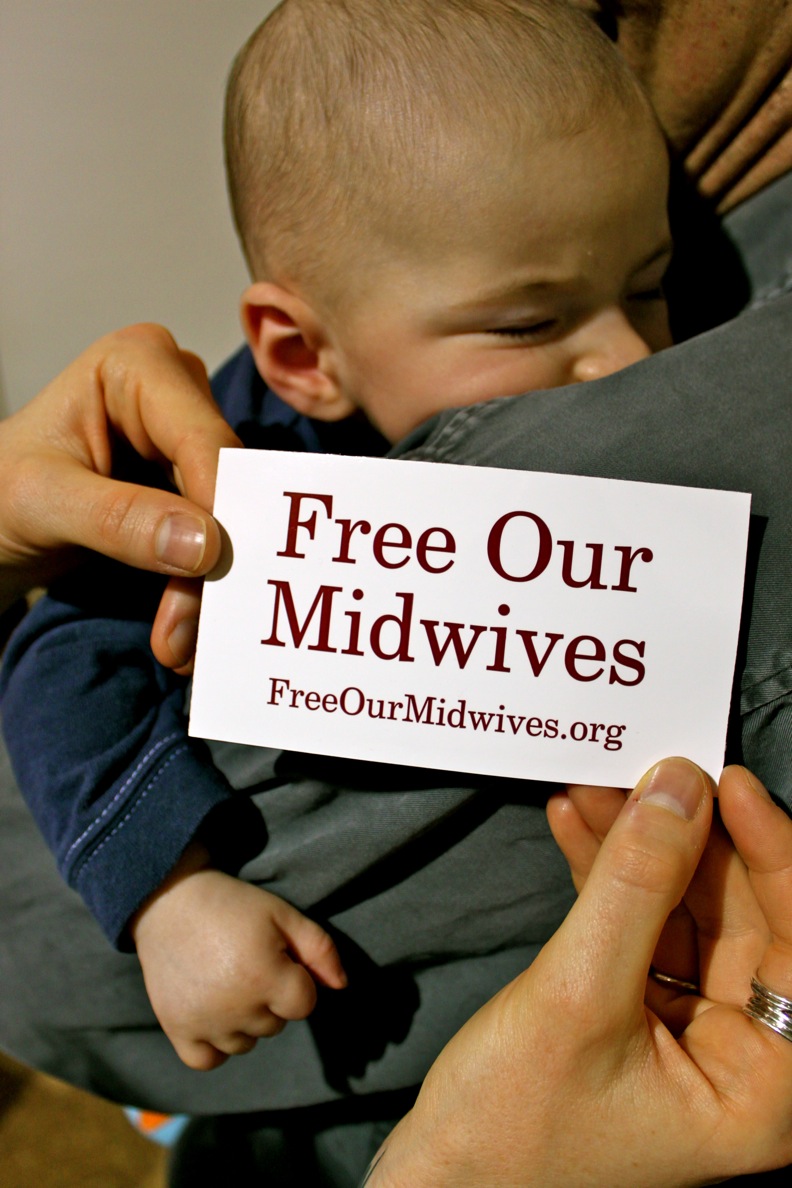
This should be the week the Midwifery Modernization Act gets passed! Support still needed in this final hour. Below find information on how to help; it was neatly and succinctly posted by the lovely and dedicated crew at Free Our Midwives. Phone calls, emails and faxes still needed. Just a couple more days!


May all babies be born into loving hands...

K. Michelle Doyle, CNM, NYS LM
www.localcaremidwifery.com
www.localcaremidwifery.blogspot.com

The Final Week :: Let’s Get the MMA Passed!

by admin on June 14, 2010
img_9999_0 We have arrived at the final phase of getting the Midwifery Modernization Act passed. Thanks to your amazing outpouring of support the bill was moved out of the Higher Education Committee last week.  Now it is poised to be brought to a full vote in the Assembly and Senate.  This is the moment!
This week is going to unfold step by step and we will keep you updated as the bill progresses. Watch here for up to the minute updates.  Our current strategy involves two rounds of phone calls.
The first starts now!
Monday: Contact your Assemblyperson and Senator.

1.  Call your Assemblyperson and Senator.

Find your Assemblyperson here and your Senator here and call them:

Script: Hello, my name is ______ and I am a constituent.  Please encourage the leadership of the (assembly / senate) to bring the bill to a floor vote and please vote for this bill.

2.  Call the Assembly Speaker Sheldon Silver

518-455-3791 :: Ask him to move the bill to the floor for a full vote.

Script: Hello, my name is ______ and I urge Assembly Speaker Silver to move the Midwifery Modernization Act (A8117-A) to the floor for a full vote.    Thank you.

3.  Help Us Develop Strategy: Report Back Us

If you learn where your legislator stands please report your findings back to Free Our Midwives either by leaving a comment on this action alert, letting us know on facebook or shoot us an email (jeanette@freeourmidwives.org).
********************
FAQ’s
The majority of these calls will take less than 30 seconds and be without any questions. Just in case you do speak to your legislator and/or are asked a question, here is some info to help you.
If you can not answer a question, politely let them know that you will find out the answer and you or a representative will call them back with an answer. Please contact us immediately so we can quickly and effectively answer legislative concerns.
*Don’t midwives need a written practice agreement to secure malpractice insurance?
No. Midwives can and do secure malpractice insurance in New York state without a written practice agreement.
*Don’t midwives need to work and consult with doctors to ensure women’s health and safety?
Yes!  Midwives are obligated to consult, collaborate and/or transfer care to a higher level practitioner as soon as a birth shows signs that it is outside what is healthy and uncomplicated.  A written practice agreement is unnecessary and the requirement for such an agreement creates a barrier for New York State women to receive the care they need from midwives.
*Without a written practice agreement what a will a midwife do for back-up?
Midwives can and do have supportive relationships with physicians without a written practice agreement. Back up plans are a necessary and integral part of midwifery care. Written practice agreements do not play a role in back up plans.
****************************
We are continuously amazed at the outpouring of support we receive from all of you. We are full of gratitude for all you have done. These final actions will ensure that women and families across New York State will have access to the quality midwifery care they deserve.
We are making a difference.


Sunday, June 13, 2010

Slightly Early Births Linked to Autism, Dyslexia

Please take this article as information not as more fuel for guilt. As parents and health care providers we already have too little of the former and too much of the later. A link to the siting study is at the bottom of the MedScape article. 

For your viewing pleasure, here is a picture of Rinchen, born almost two weeks past his due date. It is hard to be patient, but our patience is often what babies need.


May all babies be born into loving hands... 

K. Michelle Doyle, CNM, NYS LM
www.localcaremidwifery.com
www.localcaremidwifery.blogspot.com

From Reuters Health Information

Slightly Early Births Linked to Autism, Dyslexia


By Kate Kelland
LONDON (Reuters) Jun 09 - Babies born just 1 or 2 weeks before their 40-week gestation due date are more likely to develop learning difficulties such as autism or dyslexia, according to a British study published on Tuesday.
The findings show that even babies born at 39 weeks have an increased risk of a developing a learning disability compared with babies born a week later.
Scientists in Scotland, analyzing the birth history of more than 400,000 schoolchildren, found that while babies born at 40 weeks have a 4% risk of learning difficulties, those born at 37 to 39 weeks of gestation have a 5.1% risk.
"There was an increasing risk of special educational needs as the gestation date fell, so as deliveries got earlier, the risk went up," said Jill Pell, an expert in public health and health policy Glasgow University, who led the study.
"Even being just a week early put the risk up."
It is already known that a baby born prematurely is more likely to have learning difficulties. But the risks for babies born in the 24 to 40 week range had not previously been studied.
Pell found that although the risk of educational difficulties was much higher in preterm than in early term babies, the absolute numbers of children with difficulties in the 37 to 39 week group were higher, because many more babies are born at this time than before 37 weeks.
In her study, early term births accounted for 5.5% percent of cases of learning disabilities, while preterm deliveries accounted for only 3.6% of cases.
According to the World Health Organization, more and more women worldwide are delivering by cesarean section and a "significant proportion" of these surgical procedures are performed without any clear medical need.
Rates of autism have also been rising, but Pell said it would be "a leap too far" to link her findings directly to rates of autism, since autism was only one of a range of learning difficulties considered.
Pell, whose study was published online June 8th in Public Library of Science (PLoS) Medicine, acknowledged that cesarean sections were not the only factor behind early-term births. But she said doctors and women should include the risks of learning difficulties when considering a cesarean.
"It is now normal policy (in cesarean section) to deliver women a week early," she said in a telephone interview. "But if you make a decision...for an elective pre-term delivery, then it has to be a balance, weighing up the risks and potential benefits.
"What this study shows is that special education needs are another factor that need to be considered."
http://www.plosmedicine.org/article/info:doi/10.1371/journal.pmed.1000289
PLoS Medicine 2010.

Tuesday, June 8, 2010

Important! Do it Now! This Morning!

Below is a very important update from Free Our Midwives. It has come to light that consumer support of the Midwifery Modernization Act is CRUCIAL and we need it NOW. Please contact members of the Assembley Higher Education committee right now -fax, email or phone call. Here is a complete contact info for assembly higher ed committee.

May all babies be born into loving hands... 

K. Michelle Doyle, CNM, NYS LM
www.localcaremidwifery.com
www.localcaremidwifery.blogspot.com

IMG_0190.jpg

Contacting your legislators

IMPORTANT UPDATE

Here’s the MOST IMPORTANT action you could take so far to ensure midwifery care! A critical committee vote today – Tuesday June 8th – means we must *flood* ALL the Assembly Higher Ed committee members with calls/faxes/e-mails *nonstop* from now until the vote at 11:30 am. Contact *all* the committee members, not just your own legislators.  Please send faxes (best) and e-mails (also great!) and follow up with a phone call – and watch here for news!
complete contact info for assembly higher ed committee
Only have time for one letter/call?  Contact Assemblywoman Glick, who is the committee chair.
Key messages:
- you support the Midwifery Modernization Act (S5007/A8117)
- you want the Higher Ed committee to report it out of committee so that it can be voted on by the entire assembly
sample letter here
*******************************

Contacting your legislators

(for today, please focus all of your energies on contacting the members of the Assembly Higher Ed committees listed above – thanks!)
    Find your Senator here and your Assemblyperson here. Please send them a letter (Sample letter or write your own).   Fax (best) or e-mail and follow up with a phone call. If you can, visit them at their home office.  Legislators fax numbers.Tell them 3 things: -You are a constituent -Ask them to support, co-sponsor and vote for the MMA-Senate bill S5007/Assembly bill A8117  (Please check if your legislator is already co-sponsoring the bill here. If they are, thank them!  James Brennan, Assemblyman from Brooklyn, is our newest multi-sponsor.) -Tell them midwives are safe, independent health care professionals who provide necessary care to New York State women and families.  The MMA will not expand the scope of practice for midwives.

Sunday, June 6, 2010

Exciting News About the Midwifery Moderization Act!

The Midwifery Modernization Act finally has some movement within both the New York State Assembly and Senate. Early the week of June 7th, the bill will be brought to the Higher Education Committee of each chamber. This is truly exciting news! Please, if you have the inclination, send a faxed letter of support, an email or a phone call to a New York legislator. By following the links in the article below, you will easily find you the emails and fax numbers of legislators. The following information is from Free Our Midwives.org, a creative,dedicated and tenacious group in the Ithaca area.

May all babies be born into loving hands...

K. Michelle Doyle, CNM, NYS LM
www.localcaremidwifery.com
www.localcaremidwifery.blogspot.com


freeourmidwives.org

Exciting News!

by admin
Against all odds the legislation is moving!!! Over the next few weeks there will be a few critical times to act. The first is RIGHT NOW!
The current two-year legislative session draws to a close at the end of June so all legislation must pass in the next few weeks. We are excited to announce that the MMA is taking a critical step — a vote in both the Assembly and the Senate Higher Education Committees early this week. This essential step will lead to a vote on the floor in both chambers of the legislature. This is amazing news!
We’ve heard from NYSALM who is organizing the on-the-ground efforts that the consumer voice has been critical in moving key legislators. Thank you for all you have done so far. Now we need to keep up the pressure.  By the end of the month New York State women and families could have access to safe, high quality midwifery care.

Take Action On Monday!

1. Contact Your Legislators (Find your legislators, sample letters, phone scripts and details here.)
All legislators need to hear from us.  A faxed letter is best (Legislators fax numbers). Email works too.  Please follow your letters with a phone call.
We’ve heard from other legislative movements around the country that a legislator hearing from as few as two constituents has made a huge difference.  If you haven’t had a chance to send a letter now is better than ever.  If you have already contacted your legislator please do it again.
Day by day we will be learning which legislators support the MMA and who we need to move.  We will be giving daily updates on our facebook page.  Find us here, “like us”, and watch for more detailed action steps.  (Not on facebook?  No worries–just contact your legislators by fax, email and/or phone.)
2. Spread the Word
Tell your friends, your playgroup, your mother.  Update your facebook status, tweet it loud and share on listserves.
If the MMA does not pass now we will be back to square one come next year. Make our effort count by passing this call to action around our entire state.  Who do you know that can help?
3.  Contact Your Supportive Doctor
The MSSNY (The Medical Society of the State of New York) has urged their members to oppose the MMA.  Supportive and informed doctors have already begun to speak up in favor of the MMA.  Please urge your doctor to do the same.  Watch for a sample letter coming soon.
**************
Together, we are a community supporting our midwives who in turn support our families.  We can create a stronger, healthier New York for women and their babies. Thank you for being a part of this movement.

Friday, June 4, 2010

MedScape:High Doses of Vitamin D May Cut Pregnancy Risks

From WebMD Health News

High Doses of Vitamin D May Cut Pregnancy Risks

Salynn Boyles


May 5, 2010 — Women who take high doses of vitamin D during pregnancy have a greatly reduced risk of complications, including gestational diabetes, preterm birth, and infection, new research suggests.
Based on the findings, study researchers are recommending that pregnant women take 4,000 international units (IU) of vitamin D every day -- at least 10 times the amount recommended by various health groups.
Women in the study who took 4,000 IU of the vitamin daily in their second and third trimesters showed no evidence of harm, but they had half the rate of pregnancy-related complications as women who took 400 IU of vitamin D every day, says neonatologist and study co-researcher Carol L. Wagner, MD, of the Medical University of South Carolina.
Wagner acknowledges the recommendation may be controversial because very high doses of vitamin D have long been believed to cause birth defects.
"Any doctor who hasn't followed the literature may be wary of telling their patients to take 4,000 IU of vitamin D," she says. "But there is no evidence that vitamin D supplementation is toxic, even at levels above 10,000 IU."
Fewer Complications With High Vitamin D Doses
Most prenatal vitamins have around 400 IU of vitamin D, and most health groups recommend taking no more than 2,000 IU of the vitamin in supplement form daily. Wagner says it took months to get permission to do a study in which pregnant women were given doses of the vitamin that were twice as high as this.
The study included about 500 women in Charleston, S.C., who were in their third or fourth months of pregnancy. The women took 400 IU, 2,000 IU, or 4,000 IU of vitamin D daily until they delivered.
Not surprisingly, women who took the highest doses of vitamin D were the least likely to have deficient or insufficient blood levels of the vitamin, as were their babies.
These women also had the lowest rate of pregnancy-related complications.
Compared to women who took 400 IU of vitamin D daily, those who took 4,000 IU were half as likely to develop gestational diabetes, pregnancy-related high blood pressure, or preeclampsia, Wagner says. They were also less likely to give birth prematurely.
The research was presented over the weekend at the annual meeting of the Pediatric Academic Societies in Vancouver, British Columbia.
Infants with very low vitamin D levels are at increased risk for soft bones, or rickets -- a condition that is now rare in the U.S.
But over the last decade, more and more studies suggest that vitamin D also protects against immune system disorders and other diseases, Wagner says.
Fortified milk and fatty fish are common food sources of vitamin D, but most people get only a small fraction of the vitamin D they need through food, Wagner says. Instead, the body makes vitamin D from sunlight.
But even in sunny climates like Charleston, few people are now getting adequate levels of vitamin D from sun exposure.
At the start of the study, deficient or insufficient levels of vitamin D were seen in 94% of the African-American women, 66% of Hispanic women, and 50% of white women who participated.
Vitamin D and Pregnancy: Is More Better?
University of Rochester professor of pediatrics Ruth Lawrence, MD, has been recording vitamin D levels in new mothers and their infants for three years. She did not take part in the new study.
Lawrence, who chairs the breastfeeding committee of the American Academy of Pediatrics, says exclusively breastfed babies whose mothers have low vitamin D levels and who don't take vitamin supplements are most likely to be deficient.
"It is clear that both for mothers and their babies, vitamin D levels are low," she tells WebMD. "This is true in northern areas like Rochester and in sunny climates like Charleston."
Lawrence sees no problem with the recommendation that women take 4,000 IU of vitamin D daily during pregnancy, although she says the impact of high doses of vitamin D on pregnancy-related complications remains to be proven.
"Four thousand IU may sound outrageous to some, but I believe it is really not unreasonable," she says.
"We have been searching for the causes of preeclampsia and premature birth for many years. It is reassuring that the risk of these complications are lower for women taking extra vitamin D, but it is premature to say it is the cause."
The independent health policy group the Institute of Medicine recommends 200 IU to 400 IU of vitamin D a day for everyone, including pregnant women, but this recommendation is under review. Revised guidelines are expected late this summer.
SOURCES:
Pediatric Academic Societies annual meeting, Vancouver, British Columbia, May 1-4, 2010.
Carol L. Wagner, MD, neonatologist and pediatric researcher, Medical University of South Carolina, Charleston.
Ruth Lawrence, MD, professor of pediatrics, University of Rochester School of Medicine, New York.
News release, American Academy of Pediatrics.

Wednesday, June 2, 2010

Burdett Care Center Community Forum

The Burdett Care Center is having a Community Forum tomorrow tonight. If you are planing on coming, a RSVP is appreciated to Joyce at 271-5047.

See you there?

May all babies be born into loving hands...

K. Michelle Doyle, CNM, NYS LM
www.localcaremidwifery.com
www.localcaremidwifery.blogspot.com


Join us for the
Burdett Care Center
Community Forum
Thursday, June 3
6 - 7:30 pm
Northeast Health, Krause Center
2212 Burdett Avenue, Troy

Burdett Care Center will be a separately licensed hospital located
on the second floor of Samaritan Hospital offering prenatal care, maternity
and sterilization procedures. Following the anticipated merger of Northeast Health,
St. Peter’s Healthcare Services and Seton Health, maternity services from both
Samaritan and St. Mary’s hospitals will be consolidated at Burdett Care Center.
As we continue to move forward with the construction of Burdett Care Center,
we would like to share our design plans and welcome your feedback and suggestions.
Light refreshments will be served.
Your response is appreciated, please email Joyce
at Russellj@nehealth.com or call 271-5047.